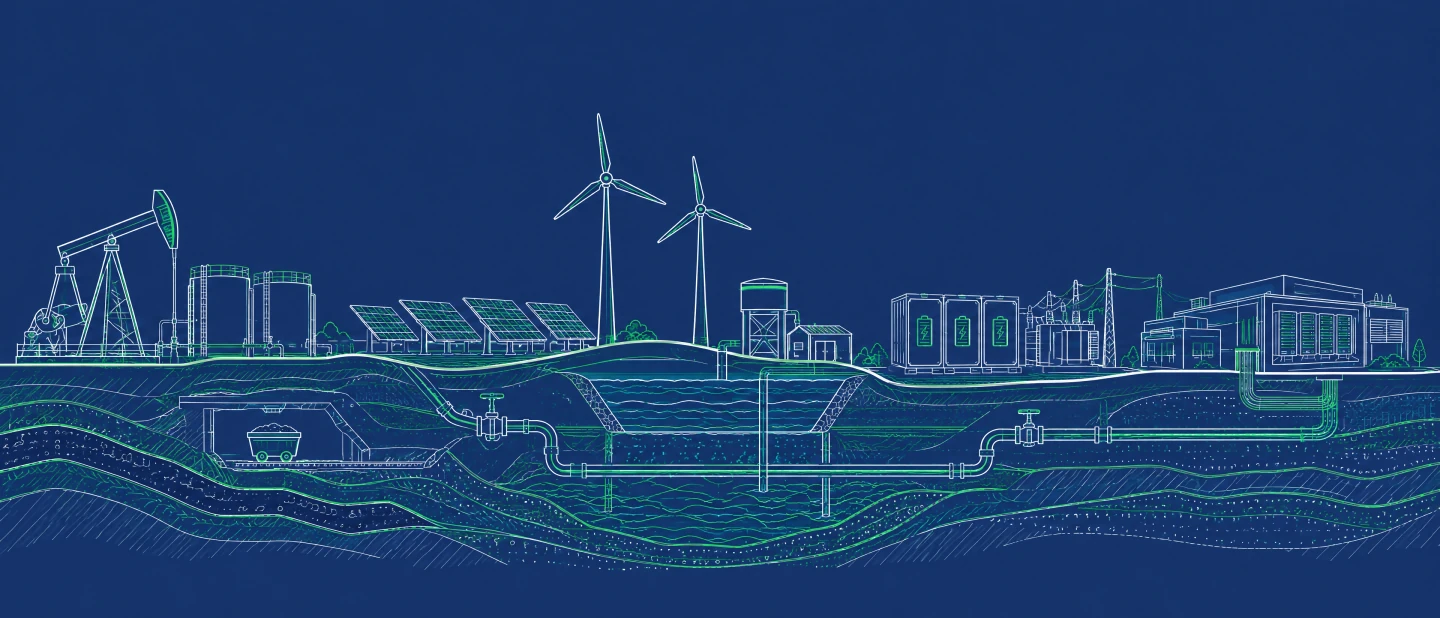
Borrowing against mineral rights keeps your ownership: the interest secures a loan or line of credit repaid from royalties or other income, with interest, and a default can end in foreclosure on the minerals. Selling transfers the interest, its future income and its production and price risk to a buyer for an agreed price.
Owners who need money from their minerals but do not want to give them up sometimes ask whether they can borrow against them. A loan or line of credit secured by a mineral or royalty interest is one way to do that; selling the interest is another. The two work very differently. Borrowing keeps the interest and adds a debt and a lien. Selling transfers the interest, its future income and its risk to a buyer. This guide explains the mechanics of each in general terms. It does not recommend either one.
How a Loan Secured by Mineral Rights Works
In a mineral-secured loan, the interest you own is the collateral: the loan documents give the lender a lien on it until the debt is repaid. Those documents say which interests are pledged, how the lien is created and recorded, and what title review the lender requires, so read them with an attorney before you sign.
The official guidance quoted below is the Comptroller's Handbook on oil and gas lending, which federal bank examiners use for bank loans to oil and gas producers (exploration and production companies), not loans to individual mineral or royalty owners. For those producer loans, it describes a lien created by a deed of trust or a real estate mortgage, depending on the state, and a title opinion and lien search before the bank lends. An owner's loan is set by its own documents and may work differently.
What serves as collateral
The collateral is the mineral or royalty interest itself, and through it the production it is paid on. Ask which of your interests would be pledged, whether the collateral description reaches more than the tract you have in mind, and how much of the credit depends on wells that are already producing. For bank loans to producers, the OCC describes the amount lent as set by a valuation of proved reserves: producing wells count most, nonproducing reserves are discounted, and unproved reserves are typically left out of the collateral.
How repayment works
Repayment comes from the royalties the interest earns, from other income, or both, as the loan documents provide. Ask whether the documents assign your royalty payments to the lender: in the producer loans the OCC describes, an assignment of production proceeds lets the bank ask the purchaser of the production to pay it directly. Interest accrues on whatever balance is outstanding. A term loan advances a set amount once; a line of credit lets the borrower draw up to a limit, repay and draw again. In the producer loans the OCC describes, that limit is normally reset every six months from a fresh evaluation of the reserves.
What Happens If Production or Prices Decline
Royalties move with production and prices. A well's production generally declines over time (see decline curves for royalty owners), and oil and gas prices rise and fall. A loan does not move with them: the balance and the interest stay as the loan documents set them. When royalties drop, more of each payment has to come from somewhere else.
In the producer loans the OCC describes, a lower reserve value at a scheduled review, from depletion, lower prices or shut-in wells, can shrink the borrowing limit below what is owed, and the guidance expects the credit agreement to require the borrower to cover that shortfall with a cash payment or more collateral. A loan to an owner may have different terms, but the question to ask is the same: what the documents require if the collateral becomes worth less than the balance.
If the loan is not repaid as agreed, or another default the documents define occurs, the lender can enforce its lien as the documents and state law allow, which can end in a foreclosure sale and the loss of the pledged interest. For producer loans, the OCC describes production cash flow as the primary source of repayment and the pledged reserves as the secondary source. Foreclosure procedure is set by state law. In Texas, for example, Property Code § 51.002 sets the notice and public-auction rules for a sale of real property under a power of sale in a deed of trust. Ask an attorney what would happen to your minerals, and what you would still owe, if the loan went into default.
Interest Cost vs. Keeping the Asset
Borrowing keeps the interest. You keep the future royalties, any gain if new wells are drilled or prices rise, and the risk if they are not or prices fall. The price of keeping it is interest and any fees, paid for as long as the balance is outstanding, whether or not the royalties hold up. Compare the total cost over the time you expect to owe the money, not only the rate, and read what the documents say about fees, prepayment and default. This guide gives no rates or terms, because each loan sets its own.
What a Sale Transfers
A sale ends your ownership of the interest you sell. The deed and the purchase agreement say what is conveyed and from what date the buyer is entitled to its income, often called the effective date; read both to see who receives royalties for production before and after that date. Along with the interest, the buyer takes on its drilling, production and price risk. You receive the agreed purchase price, paid as the purchase agreement provides. There is no loan to repay, no interest and no lien on what you sold, and you give up its future income, including any gain from new wells or higher prices.
A sale does not have to cover everything you own. You can sell part of an interest and keep the rest, as selling part of your mineral rights explains. What a mineral rights offer pays for covers how an offer is put together, and what happens after you accept an offer walks through title review and the deed.
Borrowing vs. Selling at a Glance
| Question | Loan or line of credit secured by minerals | Sale of the interest |
|---|---|---|
| Who owns the interest afterward | You do, subject to the lender's lien. | The buyer. |
| Who receives future royalties | You do, unless the loan documents assign them to the lender until the debt is repaid. | The buyer, from the date the deed and purchase agreement provide. |
| What you receive | Loan proceeds, or a credit limit you can draw on. | The agreed purchase price, paid as the purchase agreement provides. |
| What you owe | Principal, interest and any fees, as the loan documents set them. | No loan to repay; the purchase agreement and deed set the terms of the transfer. |
| If production or prices fall | Royalties may no longer cover the payments, and the debt is still owed. | The buyer receives the lower income. |
| If production or prices rise | You keep the gain, after paying interest. | The buyer keeps the gain. |
| If payments stop | The lender can enforce its lien, which can mean foreclosure on the pledged interest. | Does not arise; no loan is outstanding on what you sold. |
| Paperwork | Loan agreement and the security documents that create and record the lender's lien. | Purchase agreement, title review and a recorded deed. |
Questions to Weigh
- How much money do you need, and for how long?
- Which of your interests would be pledged, and does the collateral description reach more than you intend?
- What is the total interest and fee cost over the time you expect to borrow?
- Would royalties be paid directly to the lender, and what happens to the payments if a well is shut in or prices fall?
- What counts as a default, what happens to your minerals if one occurs, and what would you still owe?
- If you sold instead, what would a written offer for the same interest be, and what would it be subject to?
Owners answer these differently, and there is no answer that fits everyone. Borrowing and selling each raise tax questions; a CPA or tax attorney can advise on how either would apply to you. Have an attorney review loan documents or a deed before you sign, and a financial advisor can help you weigh the choice.
Compare the Loan Against a Written Offer
A written purchase offer for the same interest gives you a figure to set beside a loan's total cost and the risk you would keep. Buckhead provides a free written offer. Our offer comes at no cost and no obligation. Buckhead Energy's written offers stay open for 14 days. Use that time to read the offer, compare it with any other written offers you have, and talk with an attorney or tax advisor if you want one.
Sources: Office of the Comptroller of the Currency, Comptroller's Handbook: Oil and Gas Exploration and Production Lending (version 2.2; guidance for bank loans to oil and gas producers); Texas Legislature, Texas Property Code § 51.002. Both accessed November 4, 2026. This article is general education, not legal, tax or financial advice.
Key Takeaways
- A loan or line of credit secured by minerals keeps ownership; the interest is pledged to the lender through a lien.
- Repayment comes from royalties or other income, and loan documents can assign royalty payments to the lender.
- When production or prices fall, royalties drop but the debt does not; a default can lead to foreclosure on the pledged minerals.
- Borrowing costs interest and fees for as long as the balance is outstanding, and you keep the upside and the risk.
- A sale transfers the interest, its future income and its risk to the buyer for an agreed price.
- Compare a loan's total cost and risk against a written offer for the same interest, and have an attorney review either set of documents.
Frequently Asked Questions
Can you borrow against mineral rights?
Mineral and royalty interests can serve as collateral for a loan or line of credit. The loan documents give the lender a lien on the interest and set the amount, rate, fees, repayment and what counts as a default. Repayment comes from the royalties, other income or both.
What happens to a mineral-secured loan if production declines?
Royalties fall, but the loan balance and interest do not, so more of each payment has to come from other income. If the loan is not repaid as agreed, the lender can enforce its lien, which can end in foreclosure on the pledged minerals. Ask an attorney what the documents require before you sign.
Is borrowing against mineral rights better than selling them?
Neither is better for everyone. Borrowing keeps the interest, its upside and its risk, and adds interest cost and a lien. Selling transfers the interest, its future income and its risk to the buyer for an agreed price. Which fits depends on how much you need, for how long and how much risk you want to keep.
What does a buyer receive when I sell my mineral rights?
The buyer receives the interest the deed conveys, its income from the date the deed and purchase agreement provide, and the drilling, production and price risk that come with it. You receive the agreed purchase price, paid as the purchase agreement provides.
Can I compare a loan against a purchase offer?
Yes. A written purchase offer for the same interest shows what a sale would bring, which you can set beside the loan's total interest and fees and the risk you would keep. An attorney or financial advisor can help you compare them.
Disclaimer: Buckhead Energy is not a tax, legal, or investment advisor, and nothing in this article should be construed as tax, legal, or investment advice. This information is general in nature and provided solely for your convenience and education. Every owner's situation is different — always consult a qualified CPA, tax professional, attorney, or financial advisor before making any decision regarding your mineral rights, taxes, or finances.